The illusion of the first seven days: when enthusiasm runs ahead of results
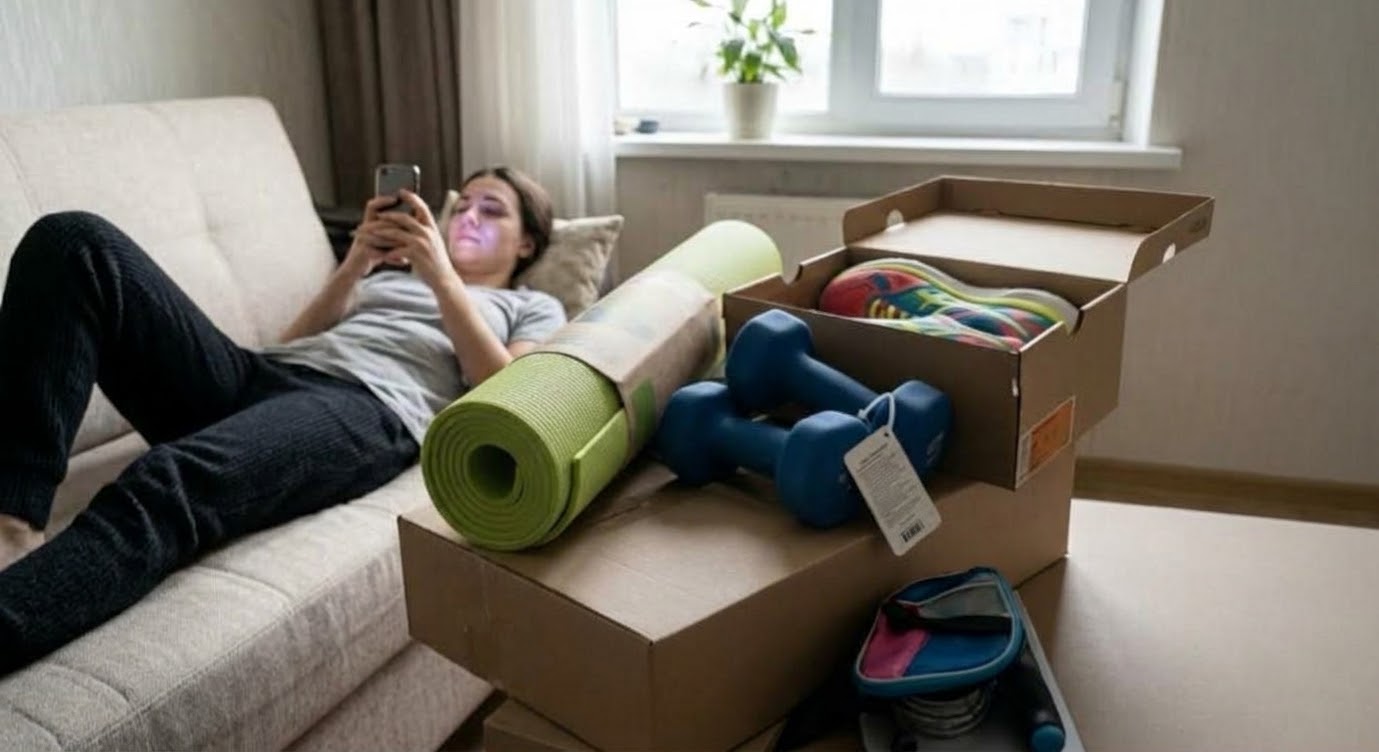
You have decided to start a “new life”. You buy a lovely workout outfit, brand-new trainers and fitness water bottles, then rush enthusiastically to your first sessions. At first, it feels as though you could move mountains: you barely notice the tiredness, the muscle soreness even feels satisfying, and a week later the scales show 1.5 kg less! Surely this is the success you have been waiting for.
But as a specialist in biomechanics and rehabilitation, I will be honest: that number can be misleading. It does not yet tell you what has actually changed in your body.
In the first few days, novelty and excitement can give you energy. Meanwhile, exercise uses up stores of glycogen, the carbohydrate stored in muscles and the liver. Glycogen is stored with water: studies estimate that each gram of muscle glycogen is associated with around 3-4 grams of water. When glycogen stores decrease, the amount of water can change too, and you see rapid “weight loss”. But that does not mean all the weight you lost was fat.
Fat does not wait several months before it starts breaking down. Lipolysis also takes place during a single workout, while a noticeable reduction in body fat takes time and an appropriate energy balance.
Then the second or third week may arrive. Enthusiasm fades, novelty no longer carries you along so easily, and your body is still adapting to the exercise.
Your brain’s goal is not to make you slim or beautiful - its job is to keep your body functioning and use energy efficiently. So when you suddenly change your usual lifestyle and add exercise, your body needs time to adapt. Returning to the familiar, less demanding routine can seem easier.
The second phase: when your body starts resisting
For some people, the excitement wears off as early as days 10-14, and reality catches up:
- More hunger (“the post-gym munchies”). Some people feel hungrier after exercise. If you do not notice this, you can end up eating more without realising it and see the scales go up instead of down. At the same time, a short-term increase in weight can also be related to water, rather than just fat.
- Tiredness and irritability. If the workload is too high and recovery is insufficient, your muscles feel stiff, you become more irritable, and after work and exercise you just want to lie down. It feels as though your emotional stamina has fallen to zero.
- A thousand reasons in your head. Your brain starts whispering: “You were doing perfectly well without all this exercise”, “Today has been too hard”, “Let’s try again next month”.
This is where it is easy to give up. Why? Because you have already put in a lot of effort, but those picture-perfect abs are nowhere to be seen.
A strategy against exhaustion: how to get through the “giving-up phase”
If you want to get somewhere instead of going round in a loop of “start - get exhausted - quit”, you need a clear plan for preserving your energy.
- Put the brakes on at the start. When enthusiasm is sky-high, deliberately reduce the workload. You do not need to train until you collapse in your very first week. Give yourself time to adjust to the schedule and leave some energy for recovery.
- Compare yourself only with where you were yesterday. Comparing yourself with influencers or other people at the gym can easily damage your mood and self-esteem. Notice your own small changes instead.
- Take your menstrual cycle and how you feel into account. Energy, perceived effort and fluid retention can vary throughout the cycle. But there is no universal rule of “hard workouts in the first half, recovery only in the second”. Research recommends an individual approach, rather than the same schedule for everyone. If you feel well, you can follow your plan. If you have pain or significant fatigue, reduce the intensity and choose gentle stretching, Pilates or rest.
- Follow the “do at least a little” rule. On days when you feel you have no energy at all, you can replace a full workout with ten minutes of gentle warm-up or joint mobility exercises. The point is to keep the habit of returning to movement. But when you are ill, in pain or seriously exhausted, choose rest. Missing one session does not undo your work, and you can start again.
A timeline of real change: what to expect over the months
Lasting change takes time. You cannot rebuild your whole body in two weeks. These are checkpoints for assessing your progress, rather than a rigid timetable of physiological changes: your pace depends on your starting point, programme, nutrition and recovery.
- Month 1 - learning the movements. With regular practice, your brain and muscles learn to handle new tasks. Your movements may become more confident and your coordination improve. Neural adaptation contributes to early strength gains, even when there is still little visible change.
- Month 2 - getting used to the workload. Sessions may feel easier and recovery become quicker. But if tiredness keeps building up, review the workload - this is not a “resistance phase” you have to endure.
- Months 3-5 - gradual changes in strength and body composition. With suitable exercise and nutrition, changes in your muscles and body measurements may become more noticeable. Reducing body fat depends on more than food quality and enough protein: overall energy balance also matters. These changes can begin earlier too - lipolysis does not “switch on” only in the third month.
- Month 6 - more noticeable results from regular effort. Your posture, body measurements and muscle appearance may change. Some people notice these changes earlier, others later. Assess strength, stamina and how easily you move in everyday life too, rather than just your stomach in the mirror.
- One year - results over the long term. A year of well-planned effort can make a noticeable difference to strength, stamina and body composition. How much muscle definition you see depends on the programme, nutrition and individual characteristics. Moving more easily and feeling better are already worthwhile results.
Bringing it together
Starting can be hard, and your mind will certainly find reasons to give up. But if you let go of the illusion of quick results in ten days and take a sensible, caring approach to your body, it will be easier to keep going towards change.
Tissue adaptation and learning new movement skills take time, but they are entirely possible. The main thing is to give yourself that time. And the lovely part is that exercise can eventually become your own healthy “drug”: you want to move more often, and training brings energy, enjoyment and a sense of lightness.
Would you like to build an exercise plan without exhaustion, taking your biomechanics, menstrual cycle and wellbeing into account? I would be happy to see you for an individual movement assessment and rehabilitation and Pilates sessions. Message me to arrange a consultation.